
This distinction holds material consequences. Organizations that employ consistent trial balance reconciliation processes demonstrate a 75% reduction in financial discrepancies compared to those lacking formal procedures. More critically, systematic trial balance analysis enables early identification of cash flow deterioration, expense drift, and receivables collection problems, the primary failure mechanisms in small business mortality.
What Is a Trial Balance for Small Businessess?
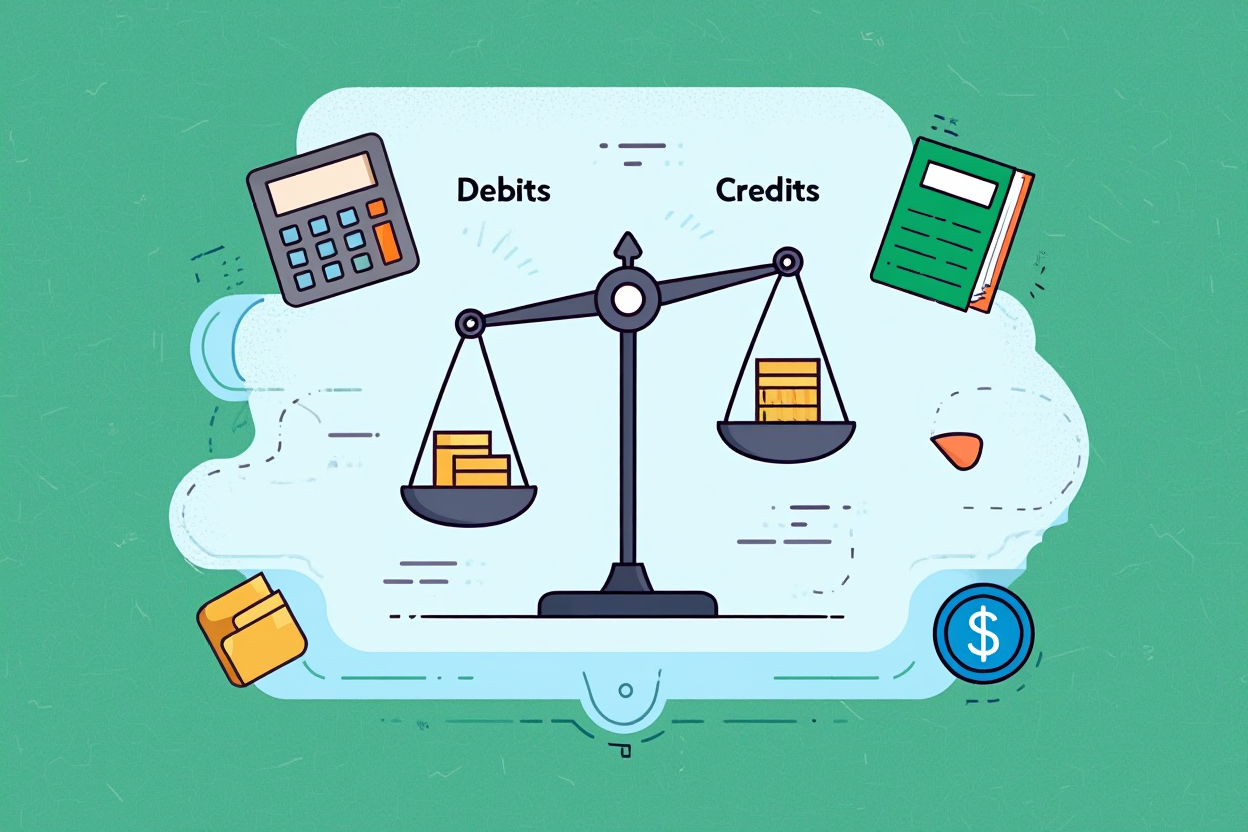
A trial balance represents a comprehensive listing of all general ledger account balances extracted at a specified point in time, organized into debit and credit columns. This document embodies the fundamental equation underlying double-entry bookkeeping. A company’s assets are financed through liabilities and equity. Every transaction creates equal and offsetting entries; when the trial balance totals reconcile, total debits equaling total credits, mathematical accuracy is confirmed.
Technical Foundation and Practical Application
However, the technical definition obscures the document’s functional importance. The trial balance serves three operationally distinct purposes:
First, it validates mechanical accuracy. The equality of debits and credits confirms that transaction recording followed double-entry principles. Imbalance indicates posting errors requiring immediate investigation and correction. This validation step, while essential, remains insufficient as a comprehensive control mechanism because mathematical balance can coexist with significant classification errors, omitted transactions, or intentional misstatements.
Second, it provides the foundation for financial statement preparation. According to Generally Accepted Accounting Principles (GAAP), the adjusted trial balance incorporating all period adjustments for accruals, deferrals, and other non-transactional items serves as the authoritative source for income statement and balance sheet construction. This sequencing ensures consistency and auditability across financial reporting.
Third, it enables working capital and liquidity analysis. Trial balance data directly informs calculations of current ratios, quick ratios, and net working capital metrics essential for understanding whether current assets sufficiently cover current liabilities. For small businesses where working capital constraints frequently create operational stress, this analytical capability proves invaluable.
The 3 Trial Balance Stages: Sequential Accuracy Building
Understanding trial balance typology requires an appreciation for the accounting cycle’s progression. Each variant serves distinct analytical and compliance functions within this sequence.
1. Unadjusted Trial Balance: Preliminary Verification
The unadjusted trial balance appears after all daily transactions post to the general ledger but before period-end adjustments. Its purpose is narrowly defined: confirming that debit and credit totals match. When they don’t, a posting error exists, perhaps a transaction recorded only as a debit, or recorded with mismatched amounts between the two sides.
The investigation methodology for unadjusted imbalances follows logical progression: if total debits exceed total credits by $5,000, search specifically for $5,000 amounts (or combinations thereof) recorded on the wrong side. If the difference is divided by 2 (indicating a transposition), search for reversed entries.
Unadjusted trial balance problems, once identified and corrected, eliminate the most obvious class of bookkeeping errors. However, this stage cannot detect classification errors, duplicate recordings, or omitted transactions.
2. Adjusted Trial Balance: Economic Reality Alignment
The adjusted trial balance incorporates all accruals and deferrals necessary to align recorded transactions with GAAP principles. This document reflects economic reality rather than mere transactional history.
Critical adjustments include:
- depreciation recognition, capturing asset value consumption over useful life;
- accrued expenses, recording obligations incurred but unpaid;
- accrued revenue, recognizing earned but uninvoiced earnings;
- prepaid expense conversions, matching consumption to periods, benefited.
For small business analysis, the adjusted trial balance distinction proves strategically important. Initial profitability can be misleading if depreciation and accruals are excluded, making adjusted results essential for informed hiring and investment choices.
3. Post-Closing Trial Balance: Period Closure Verification
After temporary accounts (revenues, expenses, dividends) close to retained earnings, the post-closing trial balance contains only permanent balance sheet accounts. This final verification confirms clean period closure and prevents contamination of new period records by prior period data.
For small businesses, post-closing trial balance review, while often overlooked, provides valuable audit trail documentation supporting annual tax returns and external financial statements.
Trial Balance Example: Translating Numbers Into Strategic Insight
Consider a representative adjusted trial balance for a professional services firm:
| Account | Debit | Credit |
| Cash | $31,200 | |
| Accounts Receivable | $94,500 | |
| Prepaid Expenses | $2,100 | |
| Equipment | $68,000 | |
| Accumulated Depreciation | $21,200 | |
| Accounts Payable | $28,900 | |
| Accrued Payroll | $11,400 | |
| Accrued Taxes | $15,600 | |
| Notes Payable | $32,000 | |
| Capital Stock | $65,000 | |
| Retained Earnings | $18,200 | |
| Revenue | $182,500 | |
| Payroll Expense | $79,800 | |
| Rent Expense | $9,600 | |
| Software/Tech | $5,200 | |
| Utilities | $2,300 | |
| Depreciation Expense | $3,700 | |
| Total | $296,400 | $296,400 |
This trial balance illustrates working capital position calculation: Current Assets ($31,200 + $94,500 + $2,100 = $127,800) minus Current Liabilities ($28,900 + $11,400 + $15,600 = $55,900) equals Net Working Capital of $71,900. This shows the business has enough liquidity to meet its short-term commitments, although a current ratio of 2.29 suggests cash and assets may not be fully put to work.
Accumulated depreciation of $21,200 against equipment of $68,000 indicates 31% of the asset base consumed. Depending on the estimated useful life, this suggests 2-3 years of remaining depreciation, after which replacement becomes a forward financial planning item.
Trial Balance Sheet versus Balance Sheet: Functional Distinction and Stakeholder Purpose
The conflation of the trial balance sheet and the balance sheet frequently generates operational confusion. Technically distinct, these documents serve different stakeholders with different precision requirements.
The trial balance sheet functions as an internal working document, prepared monthly or more frequently without external presentation standards. It contains every general ledger account, including revenue and expense items, temporary accounts, and accounts with zero balances. Its structure prioritizes accuracy verification and reconciliation completeness rather than external communication.
The balance sheet represents the formal financial statement standardized in presentation, prepared quarterly or annually, and distributed to external stakeholders (lenders, investors, regulatory agencies). It reflects only permanent accounts, organized into standardized classifications (current assets, fixed assets, current liabilities, long-term liabilities, equity). Revenue and expense accounts are deliberately excluded from balance sheet presentation, as these flow through the income statement.
This distinction carries practical importance: using trial balance data to prepare balance sheets requires additional formatting and classification steps. Conversely, attempting to use the balance sheet structure as a trial balance creates analytical inefficiency.
Reconciliation Discipline: From Document to Control Environment
Trial balance reconciliation transcends mechanical verification. Executed systematically, reconciliation establishes integrated financial controls preventing both intentional misstatement and unintentional error propagation.
Effective reconciliation procedures establish clear role separation: the accountant preparing transactions should not independently verify trial balance accuracy. Secondary review provides quality assurance and reduces control circumvention risk.
Monthly or quarterly reconciliation frequency prevents error accumulation. Quarterly reconciliation, while common in large organizations, permits three-month error windows in small businesses where account volumes remain manageable, justifying monthly frequency.
Reconciliation automation, where systems integrity permits, substantially reduces manual error risk while improving audit documentation. Modern accounting platforms enable direct trial balance export, subsidiary ledger reconciliation, and variance analysis capabilities that small businesses should actively leverage.
Working Capital Analysis: Trial Balance as Strategic Diagnostic
The trial balance sheet provides fundamental data for working capital assessment, the balance between current assets and current liabilities, determining operational liquidity.
- Working capital requirement (WCR) calculation: This math involves subtracting current liabilities from current assets, directly involving the trial account balance. Negative working capital is an indication that current liabilities are creating solvency stress. This situation led to operational tension that requires immediate strategic attention.
- Current ratio analysis: current assets divided by current liabilities derives similarly from trial balance data. Interpretation requires context: A current ratio around 1.5x to 2.0x reflects stability, whereas falling below 1.0x can indicate cash strain and rising above 3.0x may point to inefficiencies.
Comparing working capital metrics across consecutive trial balances reveals trends. Deteriorating working capital over successive months indicates:
- revenue contraction relative to the expense base;
- accelerating payables while receivables collection slows; or
- increasing asset bases without corresponding revenue generation. Each pattern requires a distinct operational response.
Implementation Framework: Systematic Trial Balance Discipline
Institutional-grade trial balance management requires systematic discipline:
- Monthly extraction and reconciliation: Within five business days of closing the month, finalize the trial balance and reconcile bank, customer, and vendor balances.
- Comparative analysis: Extract prior-month trial balance. Compare account-by-account for material variances. Investigate items exceeding 5-10% monthly variance thresholds.
- Adjustment review: Document all adjusting entries, including supporting calculation methodology. Create an audit trail for subsequent review.
- Strategic metrics calculation: Calculate working capital, current ratio, and key operational metrics. Trend analysis across quarters provides strategic insight.
- Documentation and retention: Maintain trial balance records alongside supporting reconciliations. This documentation proves essential for tax substantiation and external audit processes.
Spot errors early and keep your books accurate with Trial Balance!
The trial balance transcends accounting formality. It represents the governance infrastructure enabling financial literacy, early problem identification, and informed strategic decision-making. At Next Level CFO, our financial leaders understand that profit and cash flow are different. You can’t sustainably scale what you don’t understand. Hundreds of businesses we’ve advised transformed their financial health through this simple discipline.
Small business owners mastering systematic trial balance analysis, reconciliation, comparative analysis, and metric derivation establish a competitive advantage through superior financial visibility and decision quality. Contact us today and allow our professional to review your trial balance for an informed strategic move.
Related Post:
- Understanding IRS Mileage Rate 2026
- What is Cost of Goods Sold CoGS Formula
- Comptroller vs Controller
Frequently Asked Questions
1. What is a trial balance in accounting?
A trial balance is a report that lists all general ledger accounts and their balances at a specific date. It confirms that total debits equal total credits before preparing financial statements.
2. Why is a trial balance important for small businesses?
It helps catch bookkeeping errors early, ensures your books are balanced, and prepares accurate data for your income statement and balance sheet. Clean numbers lead to better financial decisions.
3. How often should a small business prepare a trial balance?
Most businesses generate it monthly. This keeps records accurate, simplifies tax preparation, and prevents year-end surprises.
4. What’s the difference between a trial balance and a balance sheet?
A trial balance checks that debits and credits match. A balance sheet shows your company’s financial position—assets, liabilities, and equity, after adjustments.
5. What causes a trial balance not to match?
Common causes include data entry mistakes, missing journal entries, double postings, or incorrect account classifications. Regular reconciliation helps prevent these issues.